Paint It Your Way: The Complete TDU 2025 Car Customization and Tuning Breakdown
Let's be real — half the fun of Test Drive Unlimited has always been the garage. Not just owning the cars, but making them yours. TDU 2025 takes that obsession to a whole new level with one of the most layered customization systems the franchise has ever shipped. But with so many menus, sliders, and upgrade paths to navigate, it's easy to feel like you're spinning your wheels before you even hit the road.
Consider this your one-stop breakdown. We're going from the surface-level stuff all the way down to the nitty-gritty performance tuning, and we'll flag what actually matters for competitive play versus what's purely about looking good at the car meet.
Start With the Visuals: Making Your Car Turn Heads
Before you touch a single performance stat, take some time in the paint and aesthetics menu. TDU 2025 offers a seriously deep visual editor that goes well beyond picking a color from a wheel.
Paint Type is your first decision, and it matters more than you'd think. Solid, metallic, matte, satin, and pearlescent finishes all behave differently under the game's lighting engine. Metallic and pearlescent options tend to pop in daylight driving, while matte finishes give off that understated, stealth-build vibe a lot of players love for their daily cruisers.
Once you've nailed the base color, dig into the livery editor. You can layer decals, stripes, and custom graphics with a surprising amount of precision. If you're not feeling creative, the community livery marketplace is a goldmine — other players upload their designs, and some of the work in there is genuinely jaw-dropping.
Don't sleep on wheel customization either. Rim style, size, and finish can completely transform the personality of a car. A wide, low-profile setup on a muscle car reads totally different than the same car sitting stock. Match your wheel finish to your paint job and you'll instantly look like you know what you're doing.
Bodywork and Aero: Style That Actually Does Something
Here's where things get interesting. TDU 2025 ties some of its visual upgrades to actual performance outcomes, which means your aesthetic choices can have real consequences on the track.
Front and rear bumpers, side skirts, and spoilers all come in multiple grades. Lower-tier options are mostly cosmetic, but higher-grade aero components — especially rear wings — genuinely affect your car's downforce and high-speed stability. If you're building a car for circuit events or high-speed highway runs, investing in proper aero is worth it even if you don't love how the wing looks.
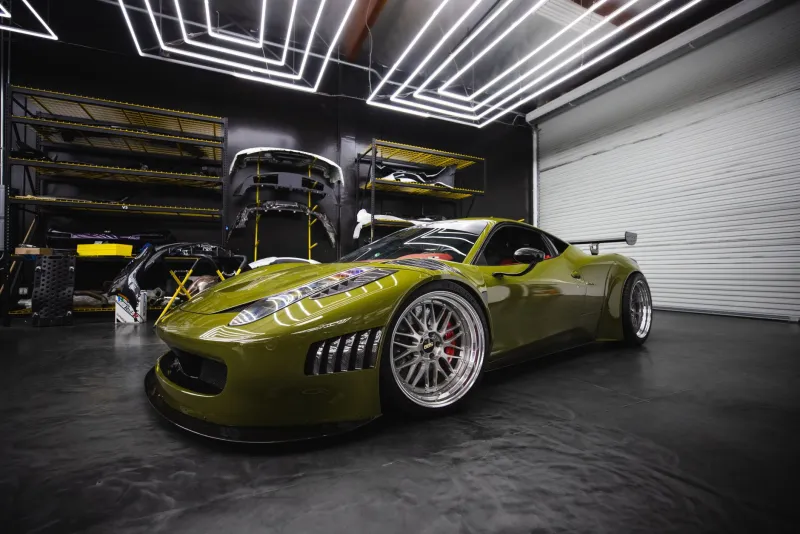
Widebody kits are available for a solid chunk of the roster and they're not just for show. Widened fenders allow for wider track widths, which ties directly into how your tires sit and how the car handles lateral load in corners. It's a small detail, but it's the kind of thing that separates a thoughtfully built car from one that just looks cool in screenshots.
The Performance Layer: Tuning Your Ride for Real Results
Okay, now we're getting into the stuff that actually wins races. TDU 2025 structures its performance upgrades into tiers, and you'll want to work through them methodically rather than just throwing money at the most expensive parts.
Engine and Drivetrain
Start with your engine internals — air intake, exhaust, and ECU tuning are your first stops. These upgrades give you the most noticeable power gains early on without completely changing how the car drives. Going straight to a full engine swap or forced induction before your drivetrain can handle it is a classic mistake that leaves new players with a car that's fast in a straight line but undriveable everywhere else.
Speaking of which, transmission tuning is criminally underrated. Adjusting your final drive ratio and individual gear spacing can make a massive difference in how a car accelerates out of corners versus its top-end speed. For circuit racing, shorter gears keep you in the power band. For open-road cruising and top-speed events, you want the opposite.
Suspension and Handling
This is where veteran players earn their edge. The suspension tuning menu in TDU 2025 is detailed enough to be genuinely useful, covering ride height, damper stiffness, anti-roll bar tension, and camber angle.
For most players, a moderate drop in ride height combined with stiffer anti-roll bars front and rear is a solid starting point. It reduces body roll without making the car feel like it's riding on concrete. From there, dial in your camber — a slight negative camber (around -1.5 to -2.5 degrees) improves cornering grip without chewing through tires too fast.
If you're building a dedicated drift car, flip that logic: softer rear dampers, more rear camber, and a looser differential setup will get you sideways in style.
Tires: The One Upgrade You Should Never Skip
No matter what you're building, always max out your tire compound. It's the single upgrade with the most universal impact across every driving style. Better rubber affects braking distance, cornering grip, and wet-weather handling all at once. New players often save money here and wonder why their car still feels loose — this is almost always why.
Balancing the Build: Style vs. Competitive Edge
Here's the honest truth: you don't always have to choose between looking great and going fast. The best builds in TDU 2025 do both, but it requires intentionality.
If you're building a show car for cruising and social events, prioritize the visual layers and spend your performance budget on suspension and tires so the car still handles well. You don't need a 1,000-horsepower engine to enjoy a scenic drive.
For competitive builds, work backward from the event type. Circuit racing rewards balanced aero and suspension tuning. Drag events are almost purely about power and launch control settings. Open-road events reward top-end speed and stability, which means aero and transmission tuning matter most.
Keep a few different builds saved if you can. TDU 2025 lets you store multiple tune setups per vehicle, so there's no reason to compromise — have a street spec and a track spec ready to swap between.
Final Thoughts
The customization system in TDU 2025 is one of the most rewarding parts of the whole experience, and it rewards players who take the time to understand how all the pieces connect. Start with the visuals to make the car feel personal, then work through the performance layers with a clear goal in mind. Whether you're here to build a rolling work of art or a race-ready machine — or ideally both — TDU 2025 gives you the tools to pull it off.